In derelict parks, wild flowers arise from concrete slabs and toxic soil. There, stories blossom too. They take root in rooms without doors, leave marks on free-standing walls and grow in trespassers’ minds. PADA Studios is surrounded by such abandoned sites, including a nearby former paint factory and Barreiro's north side – industrial ruins that somehow feel like cuts across time: the present existence, in suspense, fuses with speculations on past purposes and potential futures. Ultimate open works, these spaces consist of an endless inspiration for the artists in residence. The exhibited artworks thus bear fragments and signs of shattered worlds, they embody ideas of illusion, transformation and reconstruction.
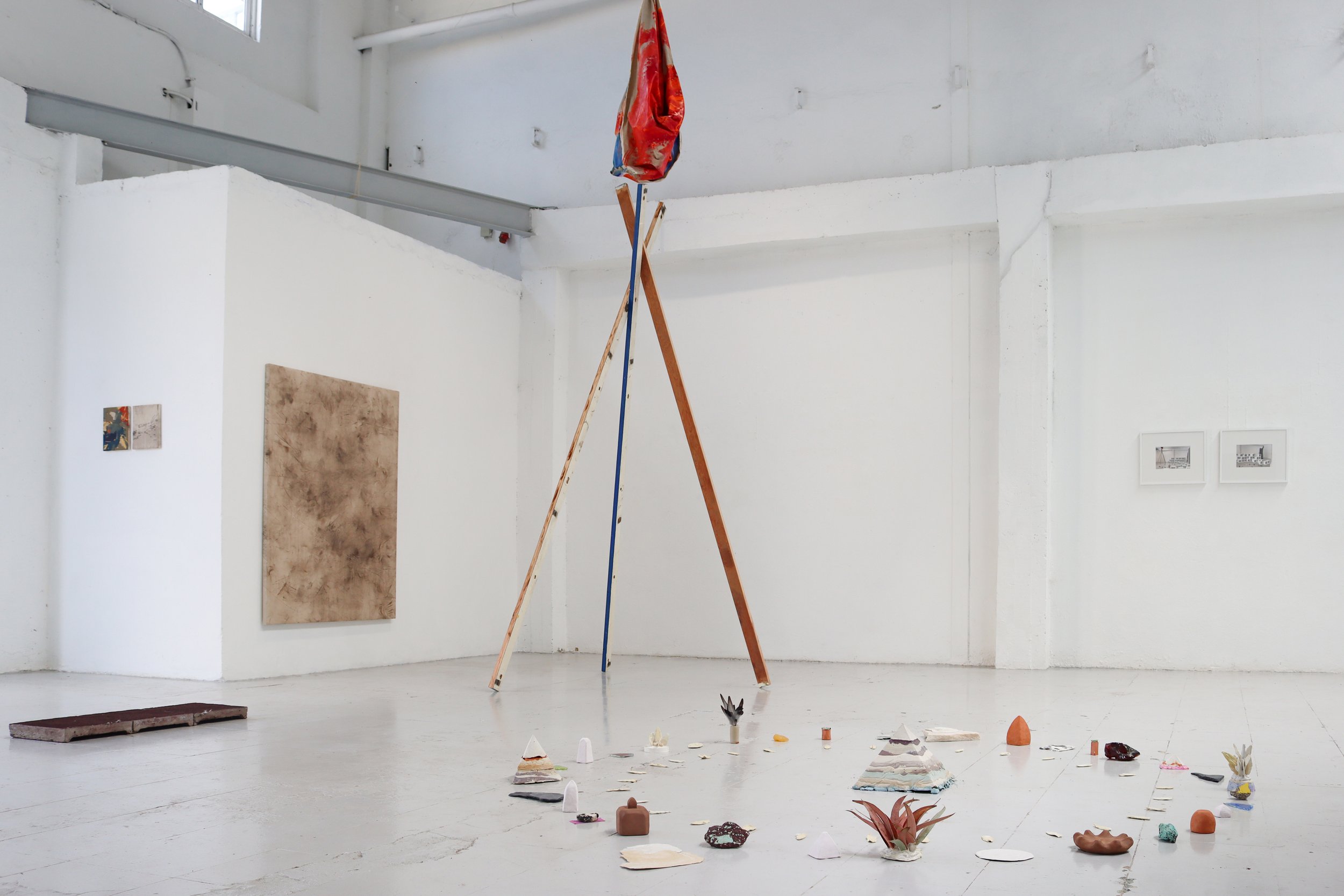
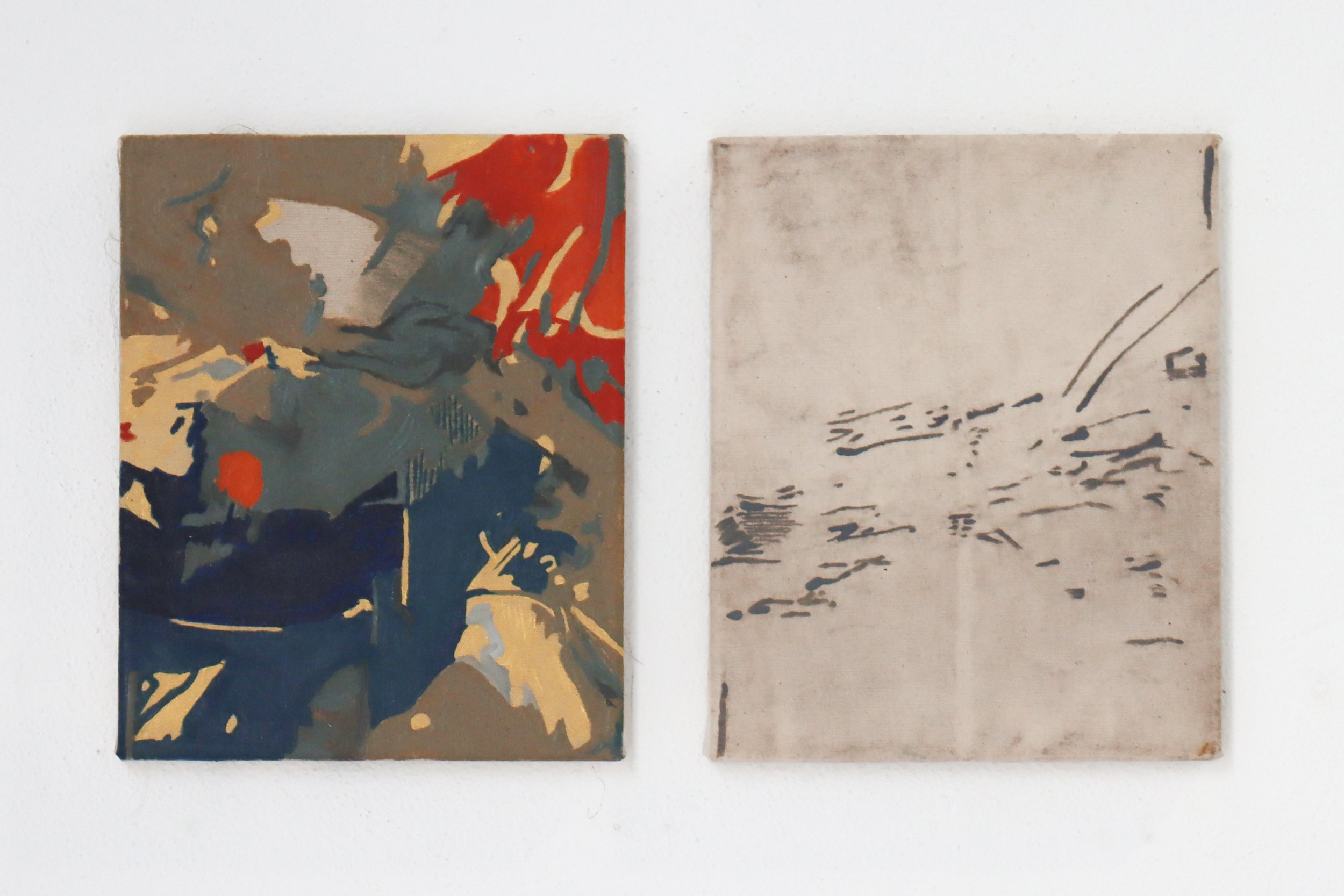
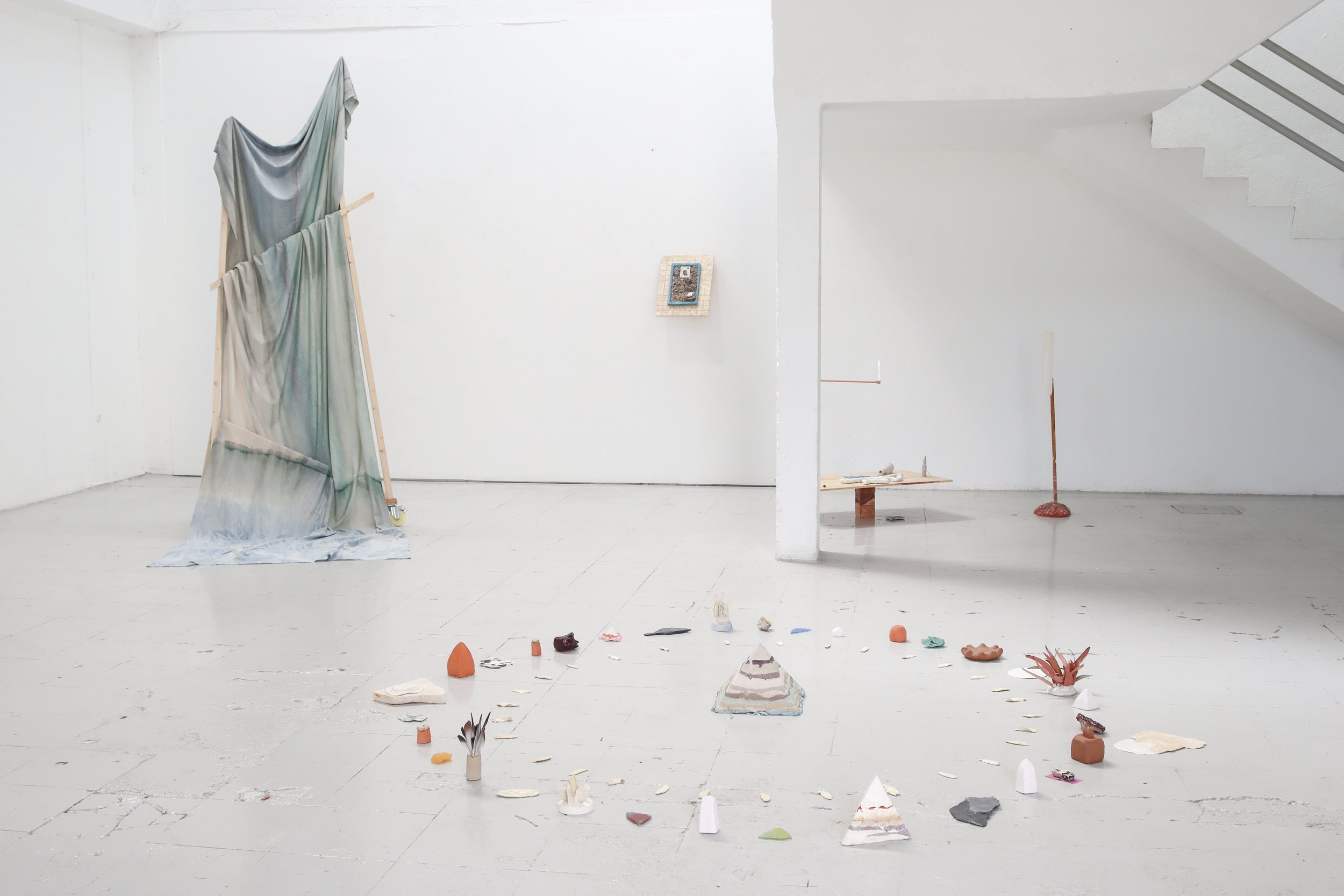
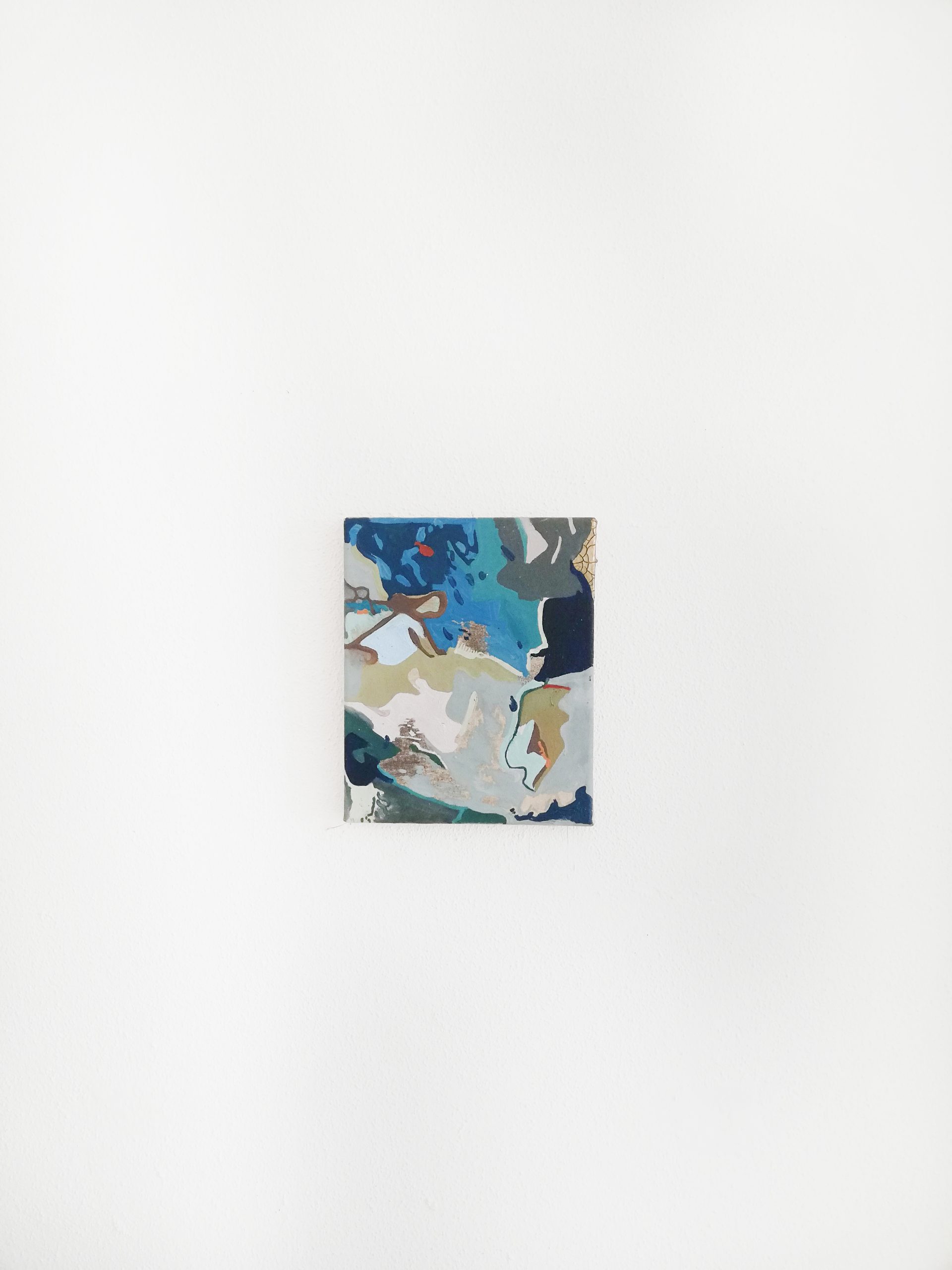
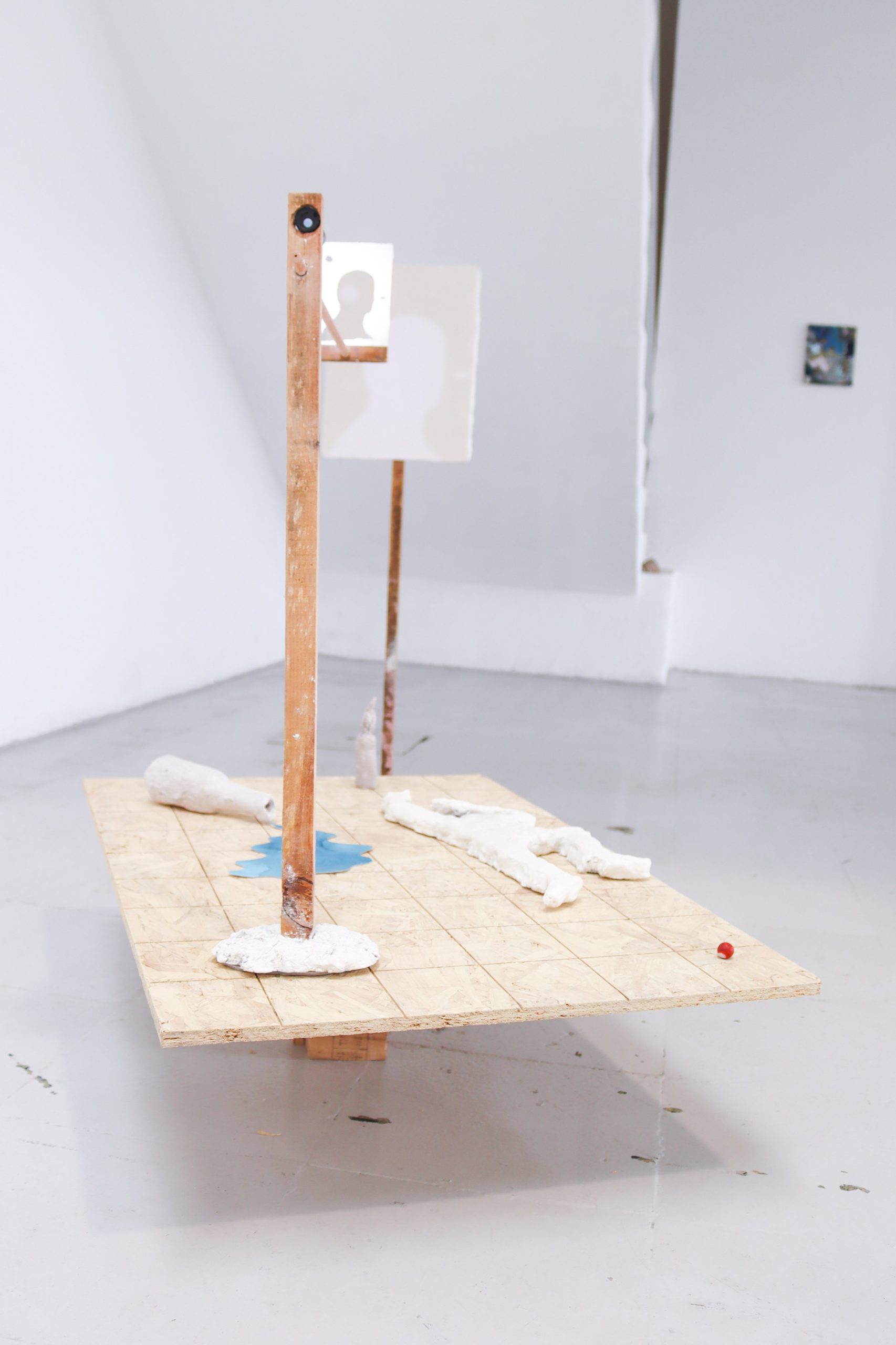
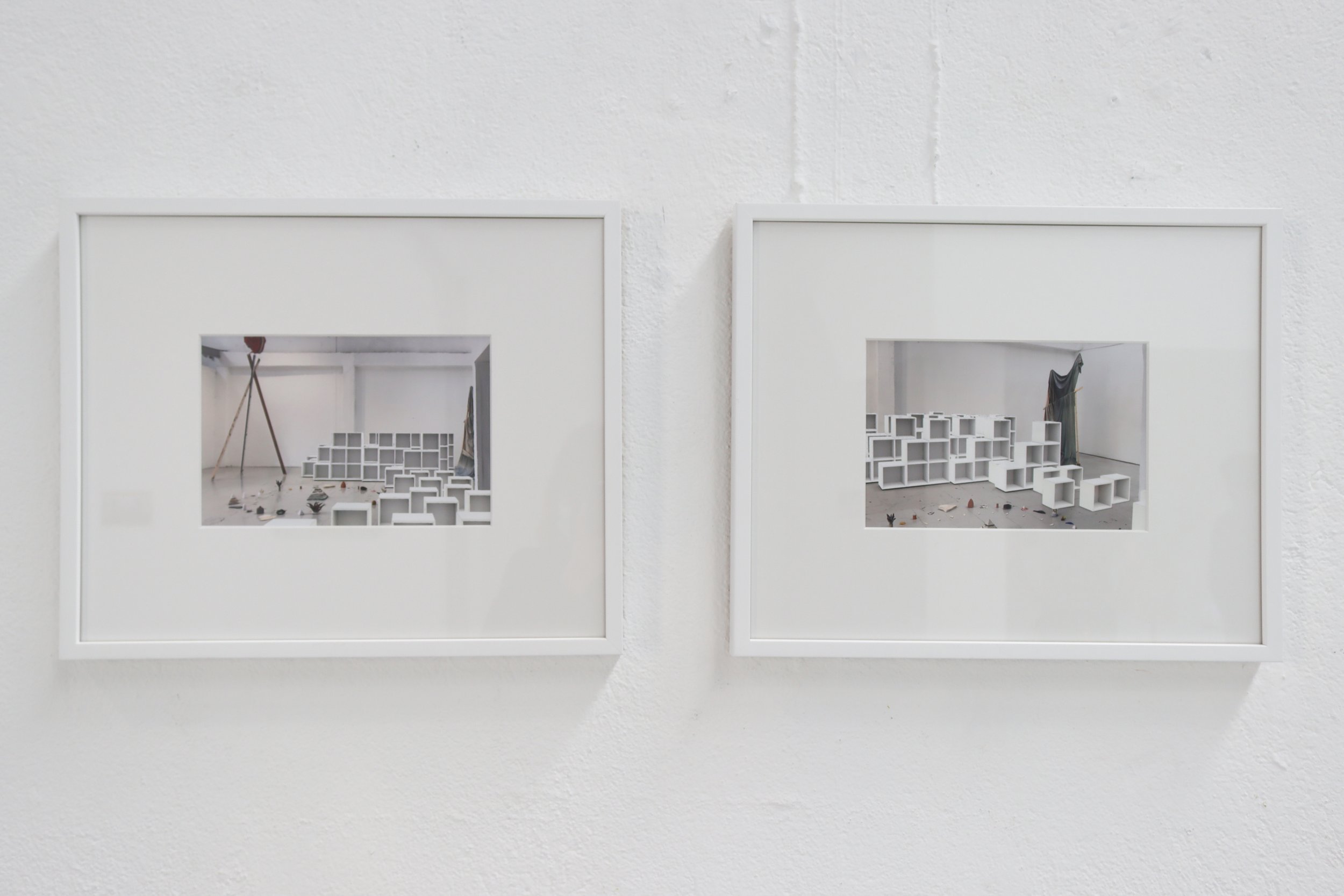
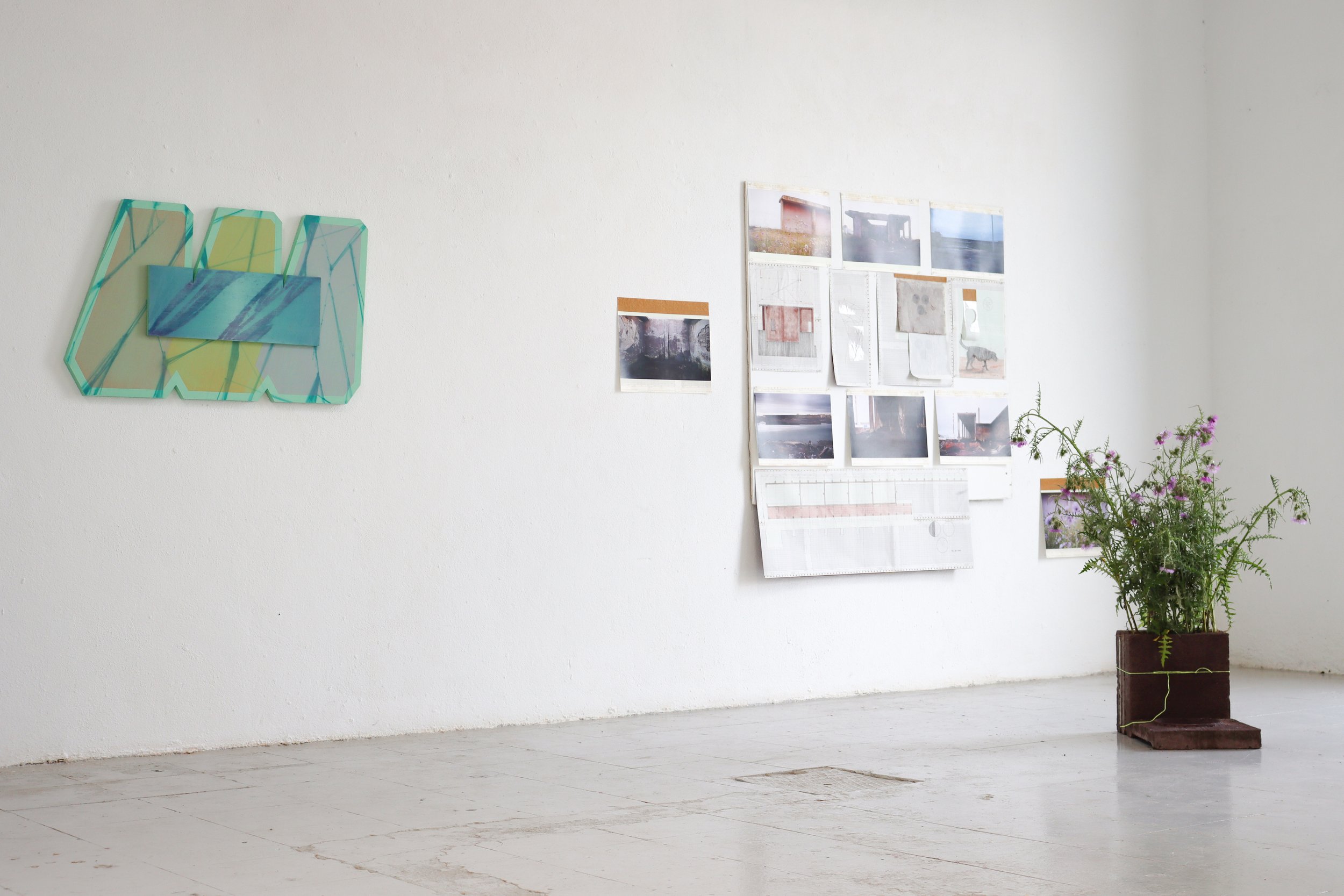
Cecilia Sebastián de Erice has gleaned ashy traces of dirt from the paint factory’s ground on her canvases, before intuitively reworking some of them by picking up their marks with paint. Thereby, she establishes a strong connection between her body, her unconscious and her environment. This space has also infused in Alex Wolkowicz’ installation, as her cascade of blue paints poured on textile was produced on-site before being carefully draped on a wooden construction. The colors and shapes of Roberto Rivadeneira’s work are inspired by the former factory’s silhouettes of light and shadow, transmuting into a dreamy multi-layered landscape. Taking a closer look, the illusion of a digitally-made work fades away to reveal precise hand gestures. The room is full of mirages. Chloë Østmo’s photographs seem to confront viewers with missing pieces: the actual exhibition space does not appear filled with empty cubes like her documentation indicates. Visitors are caught between two visions, a real and an illusory one, as her framed prints turn out to be screenshots produced via the 3D rendering app of a famous home furnishing retailer. Jesús Crespo's towering illusion of a fire was born from reflections on the symbolism of this element. Composed of a painting of a fire floating above three wooden bars resting precariously on one another, it simultaneously resembles situations of danger, convivial campfires and a guide’s torch. Brendan Sullivan’s cartoonish cinematic sculptures take the viewer into tragicomic scenes. Floating objects openly expose their craftiness and yet still preserve some kind of magic. Through an act of caring and minimal intervention, Soraya Hamlaoui laid out objects collected from the north side of Barreiro whilst thoughtfully keeping a balance between natural artefacts, chemically transformed ones, and her own miniature sculptures. Architect Thomas O’Brien has been developing a project inspired by a specific derelict building Barreiro’s old industrial park. He carefully observed and documented the site before translating his research through photographs, enigmatic architectural drawings, cement experiments, and materials he collected on-site, such as flowers, graph paper and an earthy-red pigment called Caput Mortuum (latin for “worthless remains'').
Some of the displayed photographs echo scenes of Tarkovsky’s Stalker (1979), a recurring theme in our conversations. The movie follows a so-called “Stalker”, guiding visitors through a post-apocalyptic “Zone” and helping them find the room that will fulfil their innermost desires. Embracing Tarkovsky’s view on artists, who – just like the Stalker – take on the responsibility to continuously care for their environment and for their contemporaries, the filmmaker expresses this mission to serve in his published diaries[1] by borrowing the words of Russian poet and novelist Boris Pasternak:
Keep awake, keep awake, artist, Do not give in to sleep... You are eternity's hostage And prisoner of time.
(Boris Pasternak) [1] Andrey Tarkovsky, Sculpting in Time (Austin: University of Texas Press, 1986), p.181.