In 2004, NASA's Opportunity rover (Curiosity's big brother), made an intriguing discovery: small blue spheres rich in iron on the soil of the Red Planet. Since then theories have piled up but none has yet been verified. Could they be witnesses of ancient waters, volcanic eruptions, meteorite debris, shock waves? As if to reassure oneself in front of this flood of hypotheses, scientists named these hematite concretions after a common fruit. And so there were blueberries on Mars. Strangely, a few places on Earth teems with similar million years old formations – Barreiro is one of them.
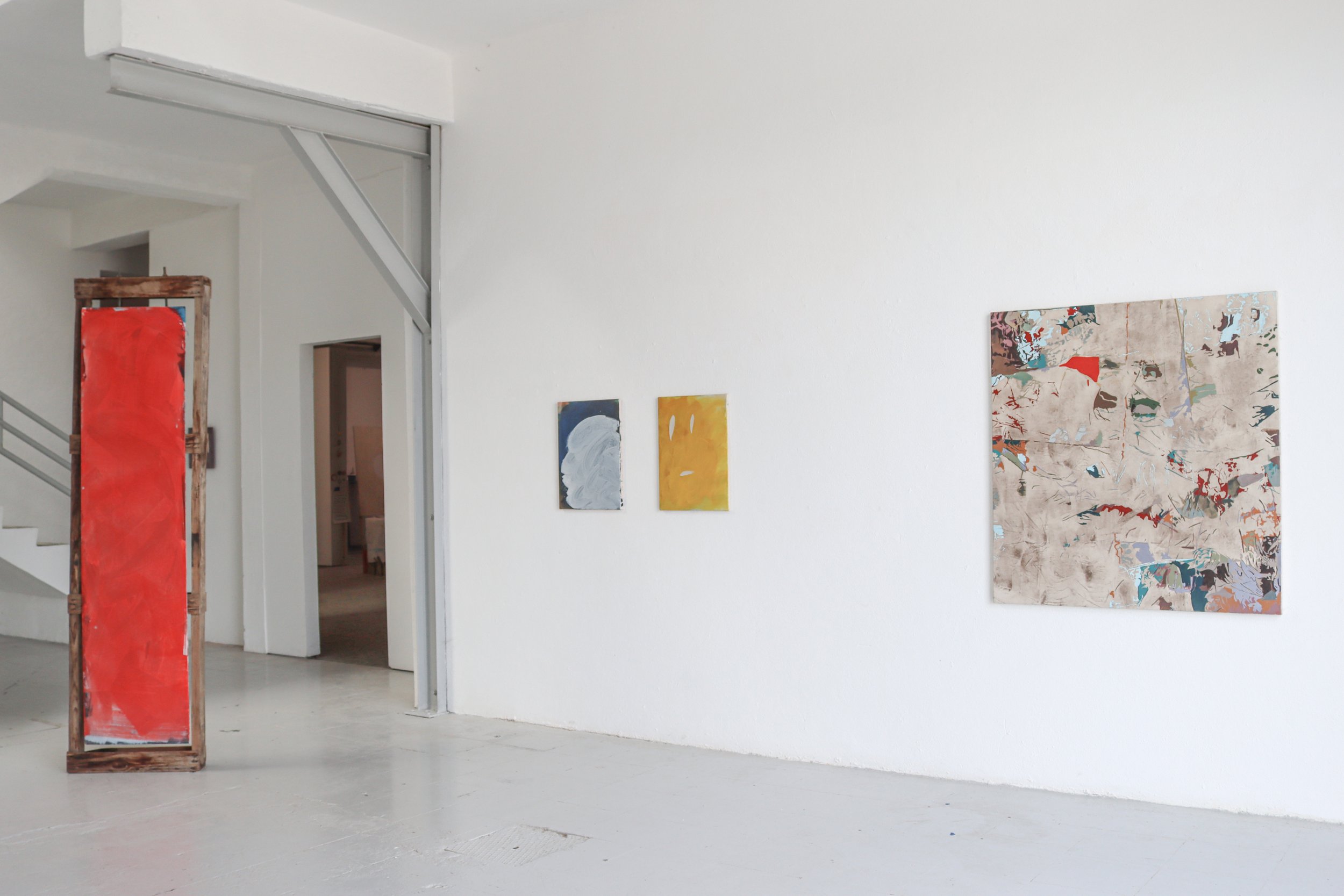
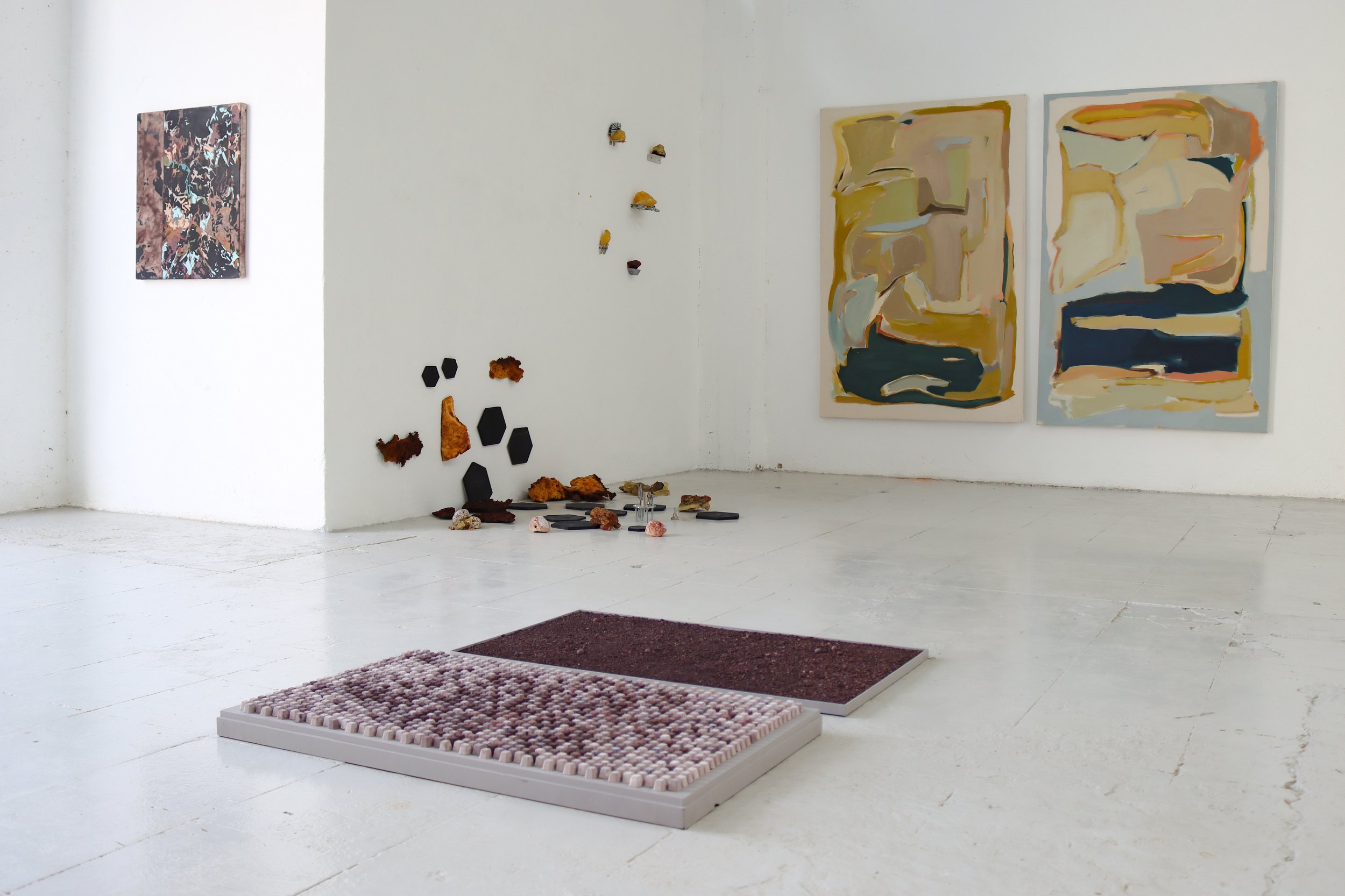
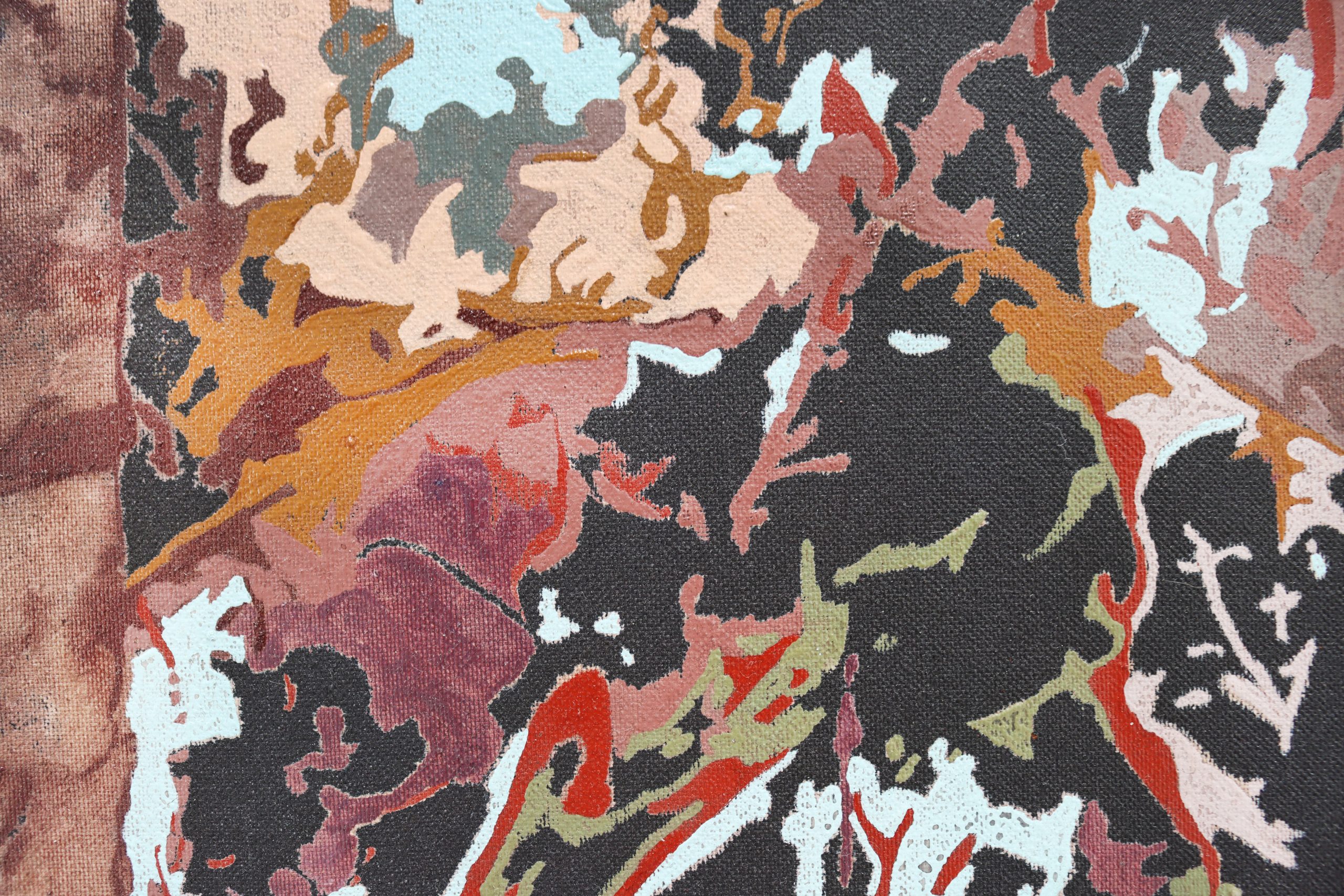
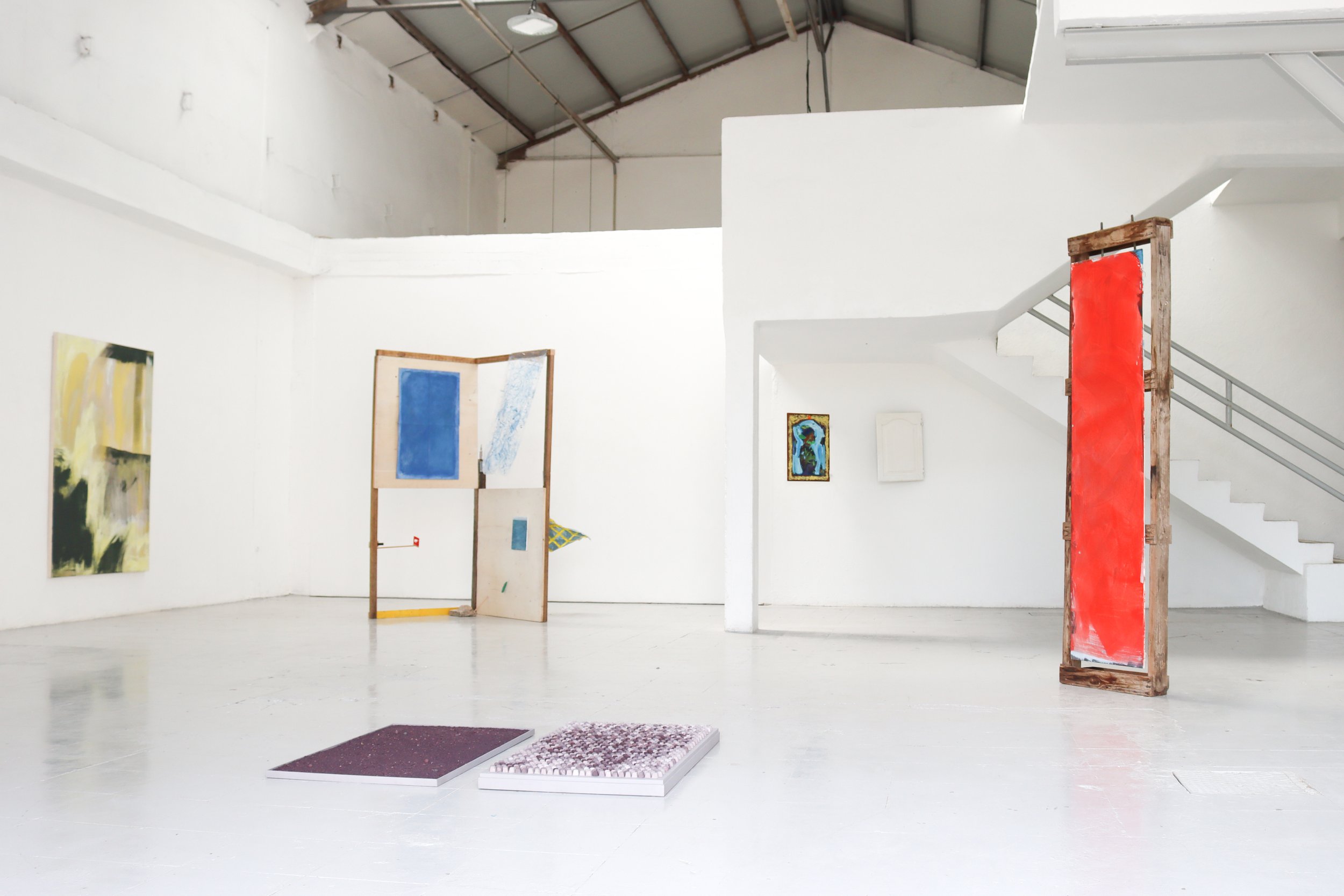
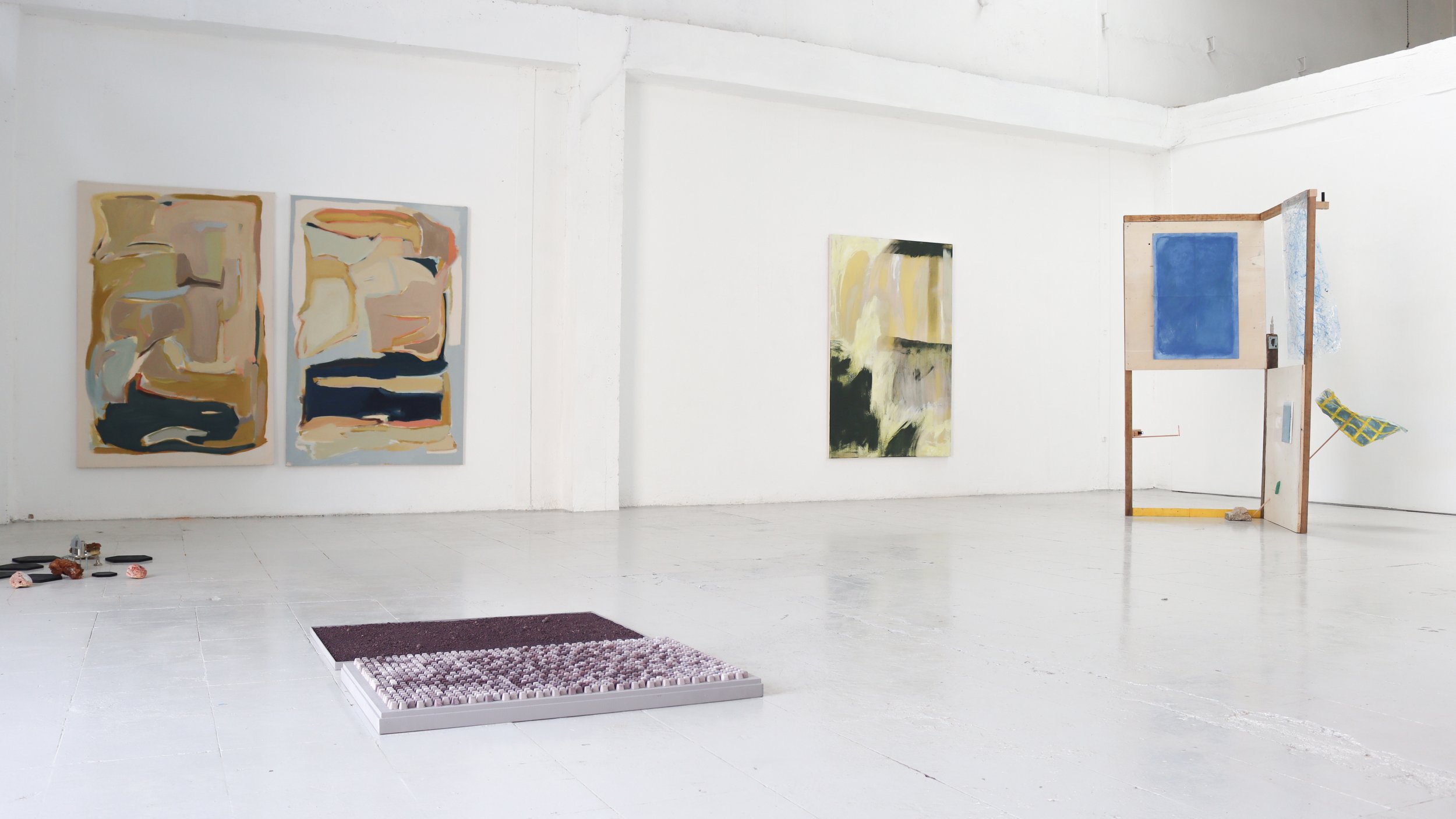
Whilst wandering around the city, Mále Uribe picked some of these iron fruits along with an iron oxide pigment commonly named caput mortuum, in reference to the worthless residue of oxidization in alchemical processes. Her compositions of purply remnants and remains play on scale and repetition to confer a sense of order that still embraces imperfection. A similar feeling emanates from Clarissa Falco's apian world. By exploring hives’ hexagonal shapes, she gave rise to a model of a planet and its space station at the crossroads of Futurama and Haraway’s Cyborg Manifesto. Facing this cosmic landscape, where resin looks like rocks, rocks look like sponges and insects are of metal with a shimmery shell, viewers are led to rethink their own relationship to the environment. Cecilia Sebastián de Erice’s work also speaks to the way we live as well as to our perception of reality, as may hint the multiplicity of interpretations within her oil and ink on dirt, oscillating between the appearance of an uncharted territory, a camouflage pattern, or a plant’s roots interlacing with one another. Her paintings bring together unconscious energies and intimate memories taking shape on canvas as shattered colors and raw gestures. Inspired by cave paintings as much as wall graffiti, Anouk Van Zwieten also relates to untamed postures. With their primary colors, primitive signs and simple titles, her artworks are misleadingly naives. They compose an ode to finds and ruins and evoke the nonsense of absolute erasure. Hannah Benassi shares this interest for scratched surfaces, specifically for the layers of colours they reveal: shades and shadows shifting on walls become infinite sources of inspiration. She captures organic qualities in man-made landscapes and fluidly translates them with her paintbrush onto the canvas, subtly balancing between density and transparency. Portuguese architecture and hues inspired Sara Marlowe Hall a collection of textured plastered tiles, sometimes exhibited as paintings, sometimes discreetly offered to façades. Besides, the ferry rides she embarked on sparked new thoughts on landscapes and the subconscious, on bodies of water and blur – reflections performed through her layering technique. Her acrylic on canvases became windows on moving landscapes, presented in their purest state, as color fields melting seas, skies, walls and hills. Jesús Crespo creates windows of its own or, rather, their shutters, out of the doors of a dresser. Two profile portraits appear as you open them, seemingly mirroring each other. Behind this apparent playfulness, the artist engages with metaphysics, instinctively letting his artworks enter our reality if not creating a portal to another one. In this sense, they are not sculptures or installations but more a form of performative paintings. Finally, Brendan Sullivan’s installation stands as a curated display in itself: it is, at once, a corner of a room where drawings and sculptures cohabit and a scaled-up book with a cryptic story. In turns of turning pages, visitors turn around the work, hunting for hints. Guided by a clay candle, their rotation, or revolution, lets them see the other exhibited artworks under a new light, through see-through curtains and ethereal gates.